Literacy-Based Coaching
As a Lever for Change
Transforming Underperforming Schools through Literacy Coaching

One of the most pressing issues related to inequality is the literacy skills of students attending underperforming schools. The ability to engage meaningfully with texts—to respond to, critique, and use them—is considered one of the most important foundations for personal and academic success.
Despite numerous efforts, literacy gaps in these schools have remained largely unchanged. School-based coaching in general, and literacy coaching in particular, have grown increasingly common and popular in the United States over the past two decades. Literacy coaches support, guide, and mentor language teachers to improve their teaching. They use a range of tools and practices to refine language instruction and make learning more meaningful.
Academic research supports the coaching model and demonstrates its effectiveness in improving both teacher learning and student achievement, particularly in underperforming schools.
Although the body of empirical research on coaching is steadily growing, there is still insufficient research examining how this role operates in different local contexts. Moreover, Israel’s education system differs from that of the United States both structurally and culturally.
A better understanding of this emerging role in the Israeli context—including coaching methods, successes, challenges, and organizational structures—can improve the professional development provided to literacy coaches, inform policy at multiple levels, and support the development of future approaches to literacy coaching in underperforming Israeli schools.
To address this need, a research and development partnership was established between the Meisharim Initiative, Ben-Gurion University of the Negev, the Hebrew University of Jerusalem, and the Center for the Study of Pedagogy.
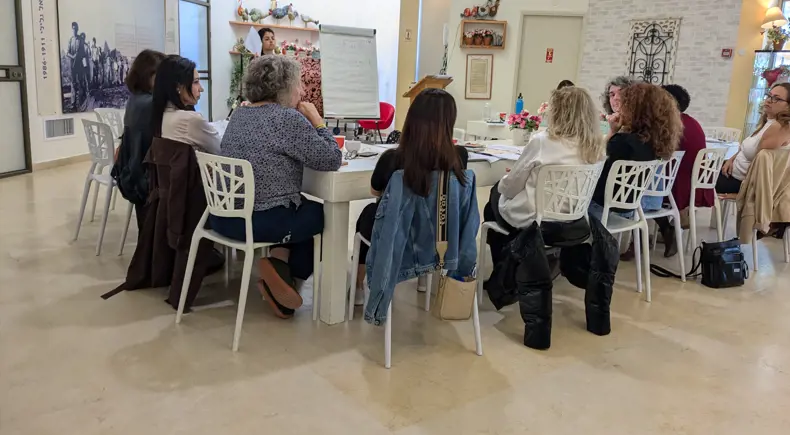
The research documented interactions between literacy coaches and teachers, observed classroom instruction, examined students’ learning outcomes, observed literacy-coach training sessions, and conducted interviews with school principals and other professionals.
These findings formed the basis for developing case studies focused on promising coaching and teaching practices. The case studies were designed to support literacy coaches, teachers, and professional training processes.
Seymour Fox School of Education, The Hebrew University of Jerusalem
Ben-Gurion University of the Negev
Center for the Study of Pedagogy
Center for the Study of Pedagogy
Center for the Study of Pedagogy
Professional Development Lead, Meisharim Initiative