2024 Annual Conference
Connecting Practice
and Research in Education

A place for meeting and dialogue

Annual Meeting of
Researchers and Educators

How can connections between educational practice and research be strengthened to help address challenges in education? How can we promote research that is relevant and useful to educational practice and policy? What connections exist between teacher education, professional development, and educational research? How do different settings in formal and non-formal education use research and evaluation as platforms to support their work? And what opportunities and challenges do these connections present?

The second annual conference, “Connecting Educational Practice and Research 2024,” explored these and other questions from the perspectives of research, educational practice, and policy. The conference fostered in-depth discussion on the connections between practice and research, with a focus on effective strategies, dilemmas, and challenges. It also provided a platform for diverse initiatives operating at the intersection of research and educational practice. Presenters included researchers, educators, teacher education institutions, representatives from philanthropic and third-sector organizations, knowledge brokers, and professionals working in non-formal education.

Adam Gamoran's lecture

Opening Lecture

How do we ensure that research-based evidence is actually used?

Key Quotes

Notable quotes
from the conference

Prof. Yariv Feniger, Chair of the Center for the Study of Pedagogy, opened the conference by saying:

“This conference was originally scheduled to take place at the end of October last year, but, of course, it was canceled in light of the circumstances. A few months ago, we began considering what to do this year and decided to hold the conference as originally planned. When we contacted those who had agreed to participate last year, most were still eager to take part.

As we keep in our thoughts the hostages held in Gaza, the soldiers serving on the front lines, those displaced from their homes, and everyone affected by this war, this conference seeks to create a sense of normality and offer hope—and that is why it matters. We want to continue discussing partnerships between academia and educational practice, and I am confident that today’s discussions will be both productive and meaningful.”

Yariv Feniger Yariv Feniger

Prof. Adam Lefstein, founder of the Center for the Study of Pedagogy—Academia–Field Partnerships and Director of the Seymour Fox School of Education at the Hebrew University of Jerusalem, presented a local perspective on the issue.

He said: “Despite the challenges—including the inherent instability of government, the absence of a culture of generating, collecting, and using data, and a lack of the necessary expertise among many of us researchers—there are reasons for optimism. Everyone attending this conference is interested in and engaged with the connections between research and practice. Philanthropic organizations are showing growing interest in applied educational research, while universities are also placing increasing emphasis on the impact of research on the economy and society.”

Adam Lefstein Adam Lefstein

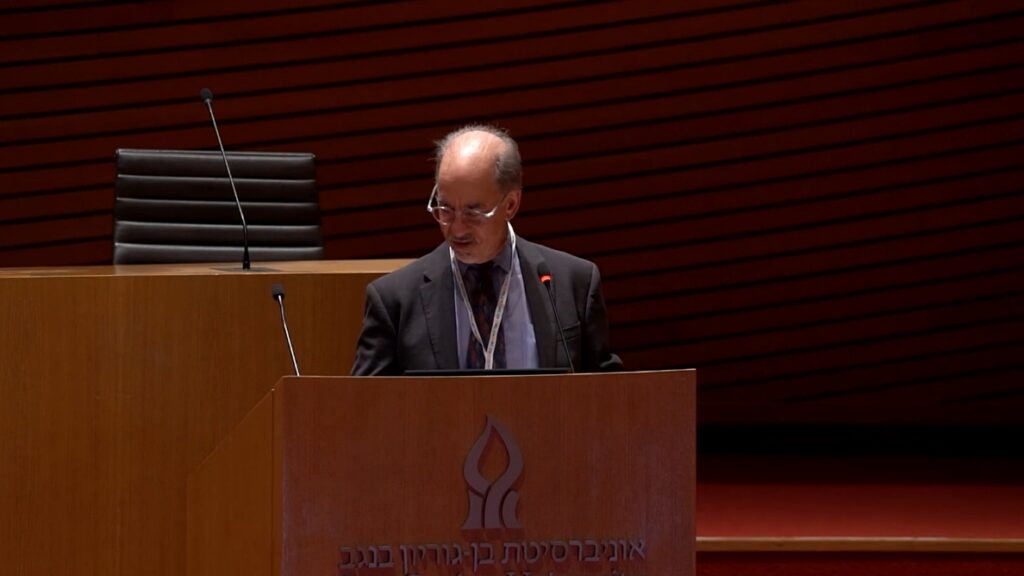
The conference’s keynote speaker was Prof. Adam Gamoran, President of the William T. Grant Foundation. The Foundation focuses on improving the lives of young people in the United States aged 5–25, reducing inequality, and strengthening the use of research evidence in policies and practices that affect their lives.

Speaking about the applied research at the heart of academia–field partnerships, Prof. Gamoran said: “We want information that someone will use. Information that goes unused is like a book that no one takes off the shelf.”

He added: “In medicine and engineering, academic faculty are rewarded for transferring technological knowledge to the public. Unfortunately, however, most social science departments do not specialize in supporting academia–field partnerships. Researchers in these faculties are rewarded for academic publications, while very few incentives exist for producing work with a social impact.”

He concluded by asking: “Why do we reward the creation of knowledge that expands academic and professional understanding, yet fail to reward the creation of knowledge with the potential to change the world?”

Adam Gamoran Adam Gamoran
Took part

Conference Partners

Kaye College

Kaye College

Academic College of Education

Avney Rosha

Avney Rosha

The Israel Institute for School Leadership

Oranim College

Oranim College

College of Education

School of Education

School of Education

The Hebrew University of Jerusalem

Yozma

Yozma

Center for Knowledge and Research in Education

Edmond J. Safra Brain Research Center

Edmond J. Safra Brain Research Center

The Study of Learning Disabilities

Rashi Foundation

Rashi Foundation

The Foundation for Strengthening Israeli Society

Ministry of Education

Ministry of Education

Office of the Chief Scientist

David Yellin College

David Yellin College

Academic College of Education

School of Education

School of Education

Ben-Gurion University of the Negev

Center for the Study of Pedagogy

Center for the Study of Pedagogy

Academia–Field Partnerships

This site is registered on wpml.org as a development site. Switch to a production site key to remove this banner.